

Independent Voices: Empowering Self-Employment and One-Person Companies in Today’s Europe
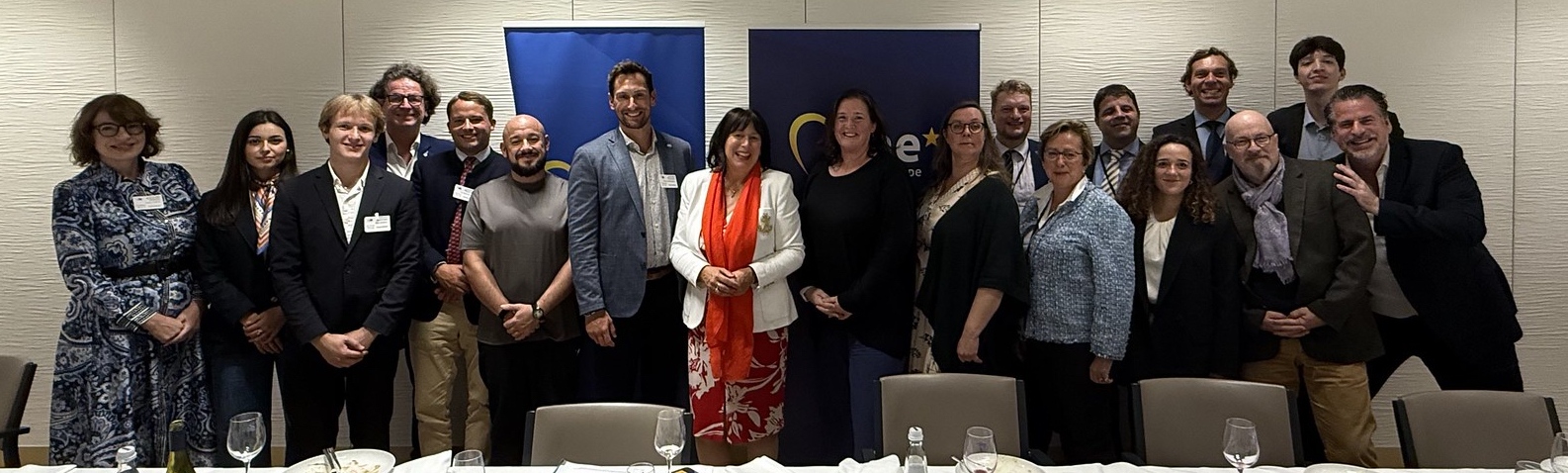
On 30 September 2025, SME Europe organised a working dinner titled “Independent Voices: Empowering Self-Employment and One-Person Companies in Today’s Europe”, hosted by Marion Walsmann MEP in the Members’ Salon of the European Parliament.
Horst HEITZ, Secretary General of SME Europe, opened the discussion by welcoming participants, reflecting on the challenge of translating complex corporate and policy information into practical insights for small and independent entrepreneurs, and emphasizing the importance of clear communication between policymakers, large corporations, and passionate entrepreneurs.
Marion WALSMANN MEP, Chair of the SME Circle and Board Member of SME Europe, and Chair of the Parlamentarischer Arbeitskreis Mittelstand, highlighted the vital contribution of self-employed professionals and one-person companies, which represent around 60% of Europe’s SMEs and operate across every sector, yet often remain under-recognised and face unnecessary administrative and regulatory burdens. She called for simpler digital procedures, improved data collection, and stronger dialogue between policymakers and entrepreneurs to ensure fair participation and better framework conditions for independent businesses in an innovation-driven economy.
Jasmin LEHETA, Styling & Interior Coach and SME Connect Chair of the Working Group Entrepreneurship, Self-Employment and OPCs, urged participants to strengthen the voice of Europe’s one-person companies and self-employed professionals—stylists, therapists, writers, designers, and many others—who make up the majority of all SMEs but remain politically underrepresented. Drawing on her own entrepreneurial experience, she described the realities of self-employment—juggling marketing, finance, HR, and client work alone—and underlined SME Connect’s role in fostering solidarity, promoting knowledge exchange, and enabling dialogue between entrepreneurs and policymakers to ensure their perspectives inform Europe’s future.
Kerstin KELLIS, OPC Alternative Practitioner for Psychotherapy, illustrated the challenges faced by self-employed professionals and one-person companies, noting that policies designed for larger corporations often trickle down, creating unforeseen administrative burdens and limiting their ability to serve clients effectively. Drawing on her own experience as a psychotherapist and Deputy Secretary General of the Taxpayers Association of Europe, she detailed how OPCs manage multiple roles—marketing, finance, HR, client services—while navigating complex regulations, and called for proportionate rules, better communication, and a partnership approach with policymakers to recognize and support independent entrepreneurs.
Philip FALKENSAMMER, Herbalife Distributor in Germany, shared his journey as an independent entrepreneur, describing how he broke away from a family business background to create his own path through direct selling, ultimately achieving personal and professional fulfillment. He detailed the challenges of starting and growing a business—navigating taxes, advertising costs, and complex regulations—while balancing family responsibilities. He emphasized the benefits of self-employment, including time leverage, pursuit of passion, and family support, and stressed the importance of fostering entrepreneurial skills, teaching financial and time management to the next generation, and establishing supportive policies that enable one-person companies to thrive.
Mario BARTENHAUSER, Digital Marketing Entrepreneur, discussed the difficulties OPCs and SMEs face in navigating complex and often inaccessible EU regulations such as the Digital Services Act, the AI Act, and accessibility laws. Drawing on his experience in digitalization and ventures in marketing and spirits production, he called for timely, clear, and practical information for businesses. He advocated for a centralized platform—potentially AI-supported—to make regulations understandable and actionable, while promoting innovation, trust, and competitiveness across Europe.
Dieter GROHMANN, Freelancer & Artist, a highly decorated OPC entrepreneur, artist, and educator, highlighted the unique contributions of one-person companies to European creative and business landscapes, illustrating how they provide jobs, foster innovation, and deliver high-impact projects across borders. He emphasized the restrictive effects of rigid regulations on entrepreneurial freedom, describing OPCs as agile “small boats in a big ocean” and advocating for policies that preserve flexibility, recognize their value, and enable them to operate without bureaucratic obstacles.
The subsequent discussion illuminated the challenges faced by OPCs, including mistrust, bureaucracy, and lack of recognition despite their significant entrepreneurial contributions. Participants underscored the social impact and mentoring opportunities provided by OPCs, particularly for women and individuals in challenging circumstances, while also emphasizing the importance of reducing administrative burdens and simplifying regulations to make compliance more accessible. Several speakers pointed out that European entrepreneurs often fall behind in accessing new technologies and market innovations, as products are frequently launched first in the US or Asia, leaving Europe at a disadvantage in understanding trends and competing globally. Overall, OPCs were acknowledged as drivers of innovation, responsibility, and societal contribution, navigating complex markets, following global trends, and fostering meaningful economic and social progress across Europe.