

COVID-19: A Coordinated European Economic Response for SMEs
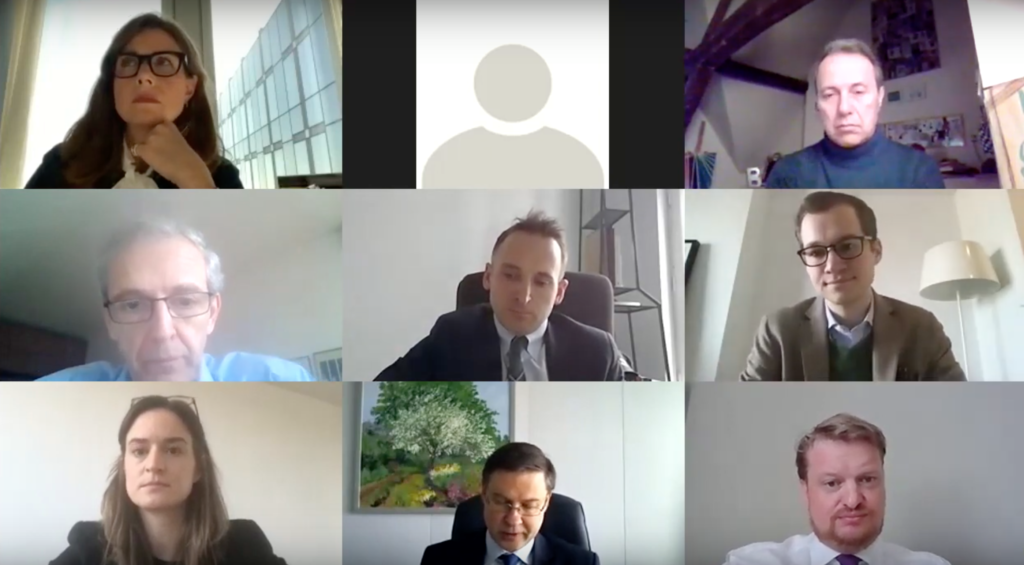
On April 2, 2020, SME Europe hosted the first webinar of its series dedicated to the impact of COVID-19 on different sectors of the European economy.
The seminar, aptly titled “COVID-19: A Coordinated European Economic Response for SMEs”, included high level speakers such as Executive Vice-President of the European Commission Valdis Dombrovskis, Commissioner for an Economy that Works for People, Ivan Stefanec MEP, Pernille Weiss MEP, Arnaldo Abbruzzini, CEO at EUROCHAMBRES, Marcin Nowacki, Vice-President, Union of Entrepreneurs and Employers (ZPP), Benedikt Blomeyer, Director of EU Policy at Allied for Startups, and Amrit Rescheneder, Head of European Affairs, Austrian Savings Banks Association as well as SME Europe’s own Executive Director Dr. Horst Heitz.
After a welcome speech held by Ivan Stefanec MEP, Pernille Weiss MEP opened the floor reinstating the importance of open communication and dialogue between SMEs and European institutions and players. If institutional stakeholders know more about problems SMEs are facing, than they can better support them through cross-sectorial action. In this regard, the COVID-19 outbreak is a test for European cohesion: if we stand together, it will enable us to “look at challenges as opportunities for better trade agreements.”
EVP Valdis Dombrovskis presented the European Response to the COVID-19 outbreak, one who focuses on protecting SMEs and jobs in order to preserve Europe’s productive capacity and better recovery once the emergency is over. To ensure this, the European Commission has launched the SURE (Support mitigating Unemployment Risks in Emergency) Initiative as well as allocated EUR 8 billions of immediate relief funds which will finance over 100 thousand SMEs going through hardship. Moreover, granting flexibility of fiscal rules and state aid rules allows Member States to design and implement ad-hoc programmes under the coordination of the European Commission.
Benedikt Blomeyer shifted the focus towards startups which, together with SMEs, will be the litmus test of Europe’s preparedness and response to COVID-19. Preparing toolkits and dedicated taskforces at both national and European levels as well as sharing best practices will help harness differences between Member States without leaving anybody behind.
In fact, SMEs suffer from a relative lack of resources and business continuity planning compared to bigger companies when confronted with extreme circumstances like the COVID-19, which impairs their longer-term resilience. Furthermore, as stated by Amrit Rescheneder, they need to allocate part of their limited resourced to ensure compliance with European legislation and nowadays, this is simply impossible as it would put too much strain on their finances. For this reason, unnecessary financial and administrative burdens should be lifted for SMEs, especially given the extenuating circumstances they are currently facing. Challenges such as the disruption of supply chains and the need to secure liquidity and cash flows, remarked Marcin Nowacki, are particularly trying for SMEs and countermeasures need to be swiftly designed and implemented to be effective.
Ultimately, it is important to ensure cooperation between all levels of authorities, especially when developing solutions for a problem like the COVID-19 outbreak which impacts the full spectrum of economic activities.