

Fuelling Europe’s SMEs:
Breakfast Debate on the European Competitiveness Fund
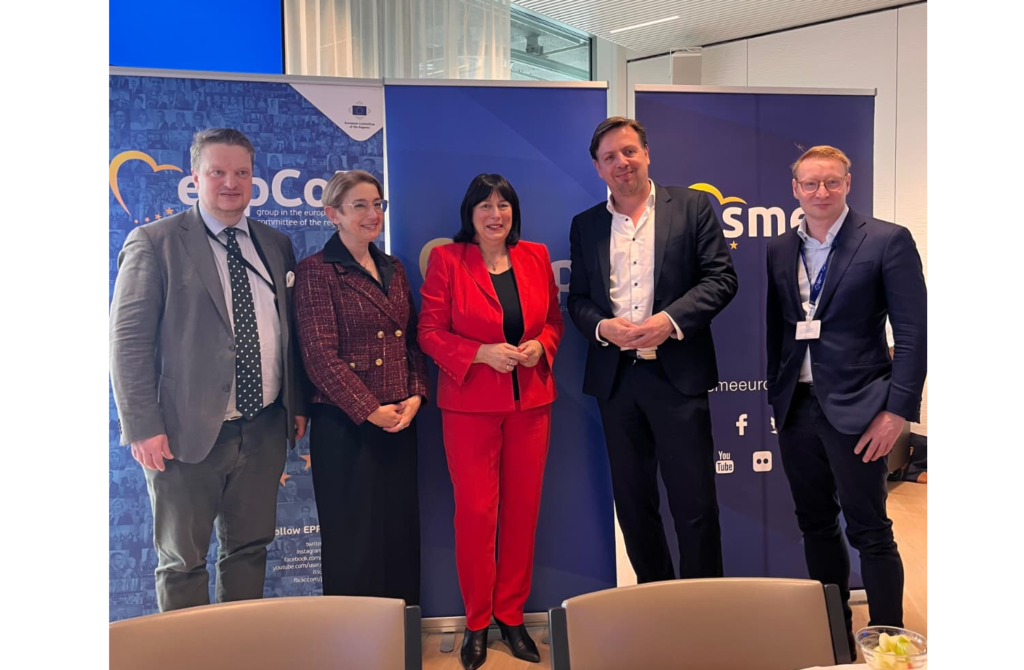
On Wednesday, 25 March 2026, we organised a working breakfast titled “Fuelling Europe’s SMEs: Breakfast Debate on the European Competitiveness Fund”, hosted by Marion Walsmann MEP, Board Member of SME Europe and Co-Chair of the SME Circle. The discussion brought together a distinguished panel of speakers, including Christian Ehler MEP, Rapporteur on the European Competitiveness Fund (ITRE Committee); Daniel Mes, Member of the Task Force on the EU’s Future Competitiveness at the European Commission; Pehr Granfalk, Member of the European Committee of the Regions and Rapporteur on the ECF opinion; Milena Angelova, Member of the European Economic and Social Committee and SME Envoy of Bulgaria; and Horst Heitz, Secretary General of SME Europe, who moderated the debate.
Marion Walsmann MEP emphasised that Europe is at a decisive moment for its economic future and that strengthening SMEs and mid-cap companies is essential for maintaining global competitiveness. She highlighted that companies face rising costs, regulatory pressure, and the demands of the green and digital transition, making it crucial that the European Competitiveness Fund supports not only innovation but also scaling and investment under real market conditions. She stressed that the effectiveness of the Fund will depend on its structure, accessibility, and ability to leverage private investment while ensuring SMEs can participate across policy areas and benefit from a stronger Single Market.
Christian Ehler MEP underlined that the European Competitiveness Fund represents an ambitious shift toward investment-oriented policy focused on productivity and long-term competitiveness. He stressed the importance of clearly defining competitiveness and warned that an overly complex structure with too many objectives risks weakening the Fund’s impact. Ehler highlighted the need to prioritise SMEs and innovators, cautioning against top-down industrial policy approaches that could disproportionately benefit large incumbents instead of fostering dynamic European innovation ecosystems.
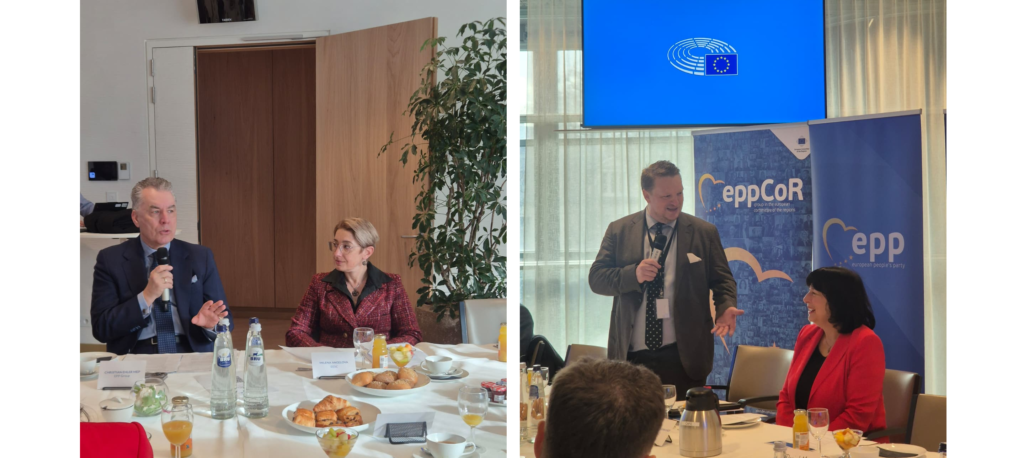
Daniel Mes explained that the Commission aims to develop practical coordination tools linking investment, reforms, and industrial value chains across Europe. He emphasised that competitiveness policy should be grounded in real economic developments and focus on strategic sectors such as clean technologies, batteries, and med-tech. Mes highlighted the importance of reducing regulatory barriers, strengthening value chains across regions, and ensuring SMEs can access opportunities within European innovation ecosystems.
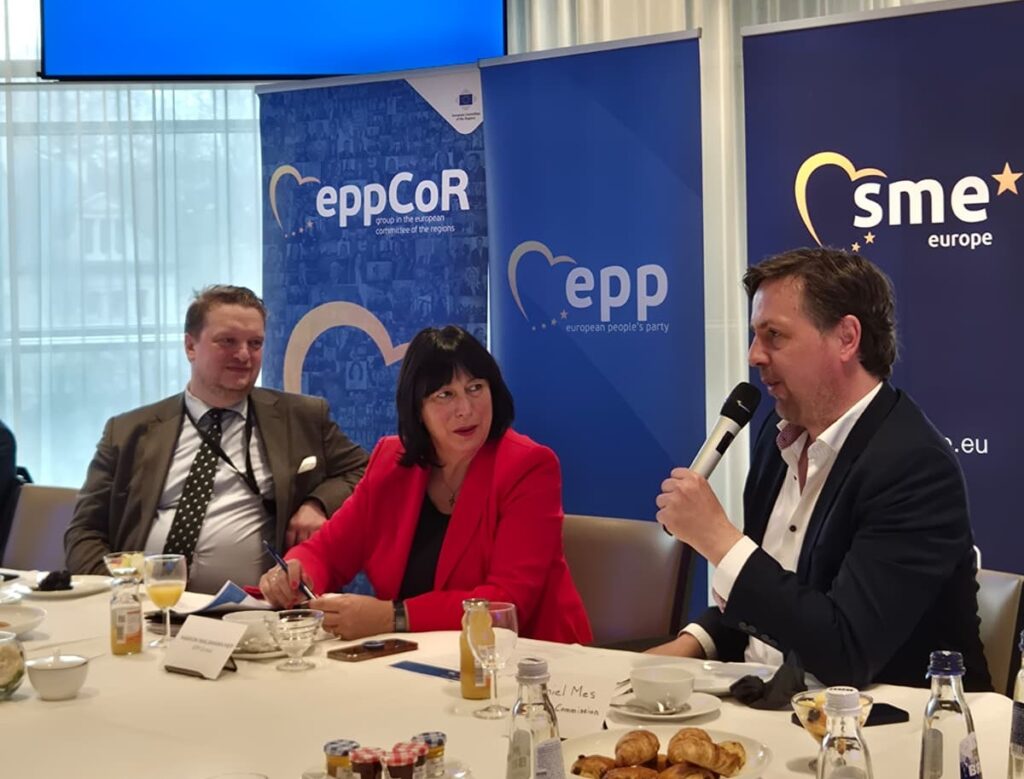
Pehr Granfalk stressed that the European Competitiveness Fund must reflect regional diversity and ensure SMEs can effectively access funding opportunities. He highlighted the importance of local innovation ecosystems, where cooperation between businesses, research centres, and regional authorities supports SME growth and scaling. Granfalk also emphasised that simplification should not lead to centralisation and called for a clear definition of competitiveness linked to productivity, innovation, and territorial resilience.
Milena Angelova stressed the importance of clear governance structures and predictable priorities to ensure SMEs can effectively access the European Competitiveness Fund. She highlighted the need to mobilise private investment, strengthen the role of national and regional actors in decision-making, and ensure SMEs remain central to Europe’s economic resilience and competitiveness. Angelova also emphasised that clearer definitions of competitiveness and strategic priorities, including digitalisation, innovation, and access to critical raw materials, will be key to ensuring the Fund delivers tangible results for businesses.
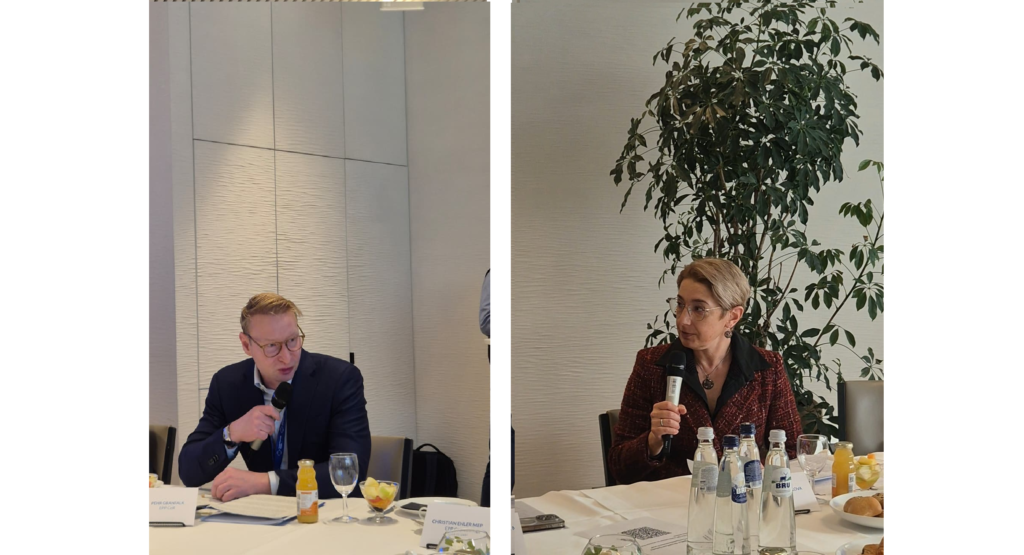
Horst Heitz framed the discussion by underlining the importance of cooperation between EU institutions to ensure the European Competitiveness Fund effectively supports SMEs. He stressed the need for clear definitions of competitiveness and practical accessibility of funding instruments for SMEs. Throughout the debate, he emphasised the importance of ensuring SMEs can participate meaningfully in the Fund and benefit from simplified procedures.
The discussion showed broad alignment among EU institutions on the importance of ensuring the European Competitiveness Fund effectively supports SMEs, innovation, and industrial competitiveness. Participants debated how to balance flexibility with strategic focus and emphasised the need to avoid excessive centralisation that could disadvantage smaller companies. A common conclusion was that clearer definitions of competitiveness, simplified access to funding, and stronger coordination between EU, national, and regional actors will be essential to maximise the Fund’s impact.