
The EU’s Engine Out of Sync – France and Germany in Crisis: What Does This Mean for Europe’s Economy?
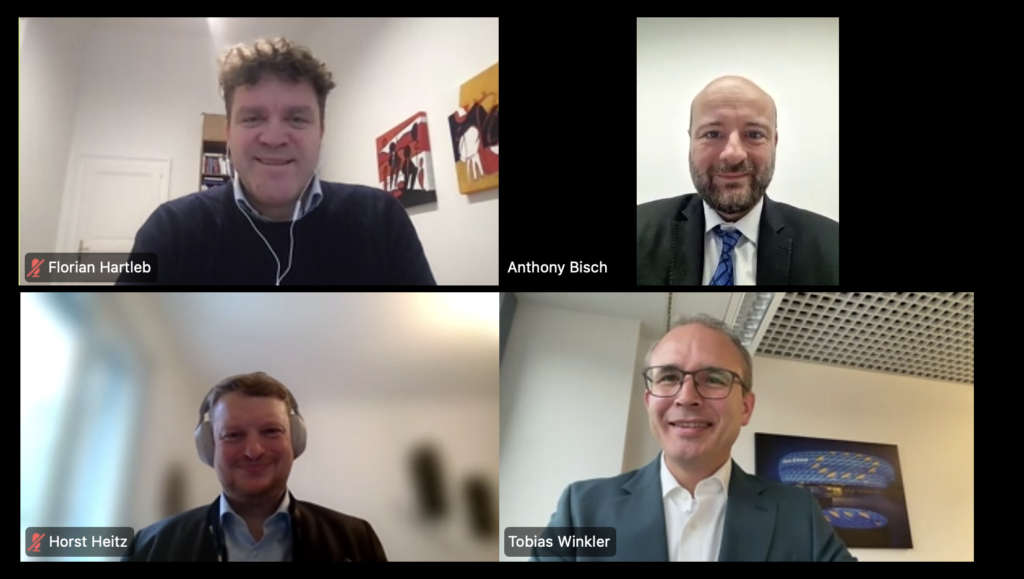
On Thursday December 19th, SME Europe of the EPP organized a Webinar on “The EU’s Engine Out of Sync – France and Germany in Crisis: What Does This Mean for Europe’s Economy?”.
The discussion was moderated by Horst HEITZ, Secretary General of SME Europe, and saw the participation of Anthony BISCH, Counselor for French Citizens Abroad for Belgium, Tobias WINKLER, Member of the German Bundestag, Committee on European Union Affairs, and Florian HARTLEB, Political Consultant, Expert on Populism and a Former Research Fellow at the Wilfried Martens Center for European Studies.
Horst HEITZ opened the discussion with a focus on the political and economic crises affecting France and Germany. He highlighted the historical role of these two nations as the backbone of the European Union and expressed the urgency of addressing the challenges to uphold this partnership. He emphasized the importance of understanding the unique challenges facing each country while fostering a dialogue that seeks common ground. The structure of the following discussion focused on three main areas: political overview, economic implications, and future development.
Tobias WINKLER provided an analysis of Germany’s current political and economic crises, highlighting the collapse of Chancellor Olaf Scholz’s government and the resulting period of uncertainty. Winkler outlined the critical issues Germany faces, such as consecutive years of economic recession, declining competitiveness, and a polarized political landscape. He discussed the Social Democrats’ advocacy for more debt and state spending, while his party advocates for more competitiveness. He linked Germany’s struggles to broader European challenges, stressing the importance of EU-level solutions to enhance competitiveness and reduce bureaucratic burdens. He ended on an optimistic note, highlighting that European Union has always grown if the challenges were high and it is part of democracy that under pressure some things are possible which are not possible in good times.
Anthony BISCH offered a detailed overview of France’s unprecedented political fragmentation, emphasizing the diminished authority of President Macron due to a fractured National Assembly. He traced the origins of this instability to decisions made after the European elections, including the dissolution of the previous majority. Bisch highlighted the rise of both extreme right and left factions, which now dominate parliamentary dynamics and obstruct governance. He identified pressing issues like immigration and economic competitiveness, arguing for streamlined regulations to foster growth and innovation. He concluded with a call for pragmatic policymaking and stronger collaboration to counteract the rise of populism and restore stability.
Florian HARTLEB explored the parallels and differences between France and Germany in their struggles with populism and political fragmentation. He highlighted the decline of mainstream parties and the rise of extremist movements as common threads in both countries. He linked these developments to broader issues – economic pessimism, migration, and energy crises, which fuel voter dissatisfaction. He also discussed the shared economic struggles, such as inflation and declining industrial competitiveness, emphasizing the need for policies that directly address SMEs concerns. He stressed the importance of rebuilding trust in democratic institutions through effective governance and collaboration between France and Germany.
To conclude, the speakers emphasized the critical role of pragmatic policymaking, cross-party collaboration, and a reinvigorated European Union competitiveness to create growth. By focusing on shared solutions and rebuilding trust in democratic institutions, there remains optimism for a stronger and more united future for Europe.