
Working Lunch: “Ukraine’s Accession to the EU Single Market Program: Looking into SME Landscape and the Needs of Entrepreneurs in Ukraine”
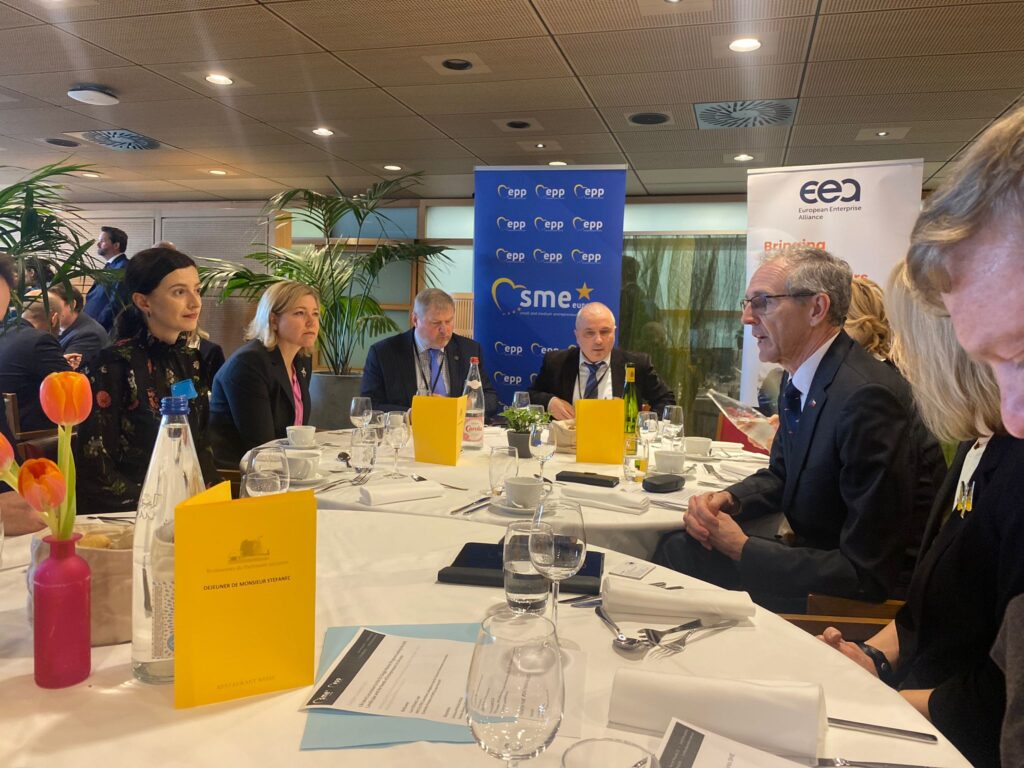
On Tuesday March 14th, SME Europe, in cooperation with the Union of Employers and Entrepreneurs and the European Enterprise Alliance, organised a Lunch Debate “Ukraine’s Accession to the EU Single Market Program: Looking into SME Landscape and the Needs of Entrepreneurs in Ukraine”. The lunch was hosted by Ivan STEFANEC MEP. The panel was represented by Svitlana MYKHAILOVSKA, Deputy Director, EBA – European Business Association; Nataliya KOZAK, Chief Strategy Officer, Impact Force; Marcin NOWACKI, EESC Rapporteur to the opinion on the EU-Ukraine solidarity lanes; and was moderated by Dr. Horst HEITZ, Executive Director of SME Europe. The debate was joined by Abir AL-SAHLANI MEP; Maria GRAPINI MEP; Henna VIRKKUNEN MEP, Jörgen WARBORN MEP and Riho TERRAS MEP.
In her statement, Svitlana MYKHAILOVSKA from European Business Association emphasized the necessity for established mechanisms to facilitate Ukrainian businesses relocating to the EU in maintaining ties with Ukraine as taxpayers. She highlighted a parallel urgency for similar mechanisms to be put in place for European companies still operating in Russia. Svitlana argued that providing assurances and financial incentives would motivate EU businesses to exit the Russian market. Additionally, she mentioned ongoing initiatives like the Investment Map of Ukraine, developed by EBA, which aims to disseminate information and aid EU businesses interested in participating in reconstruction projects within Ukraine.
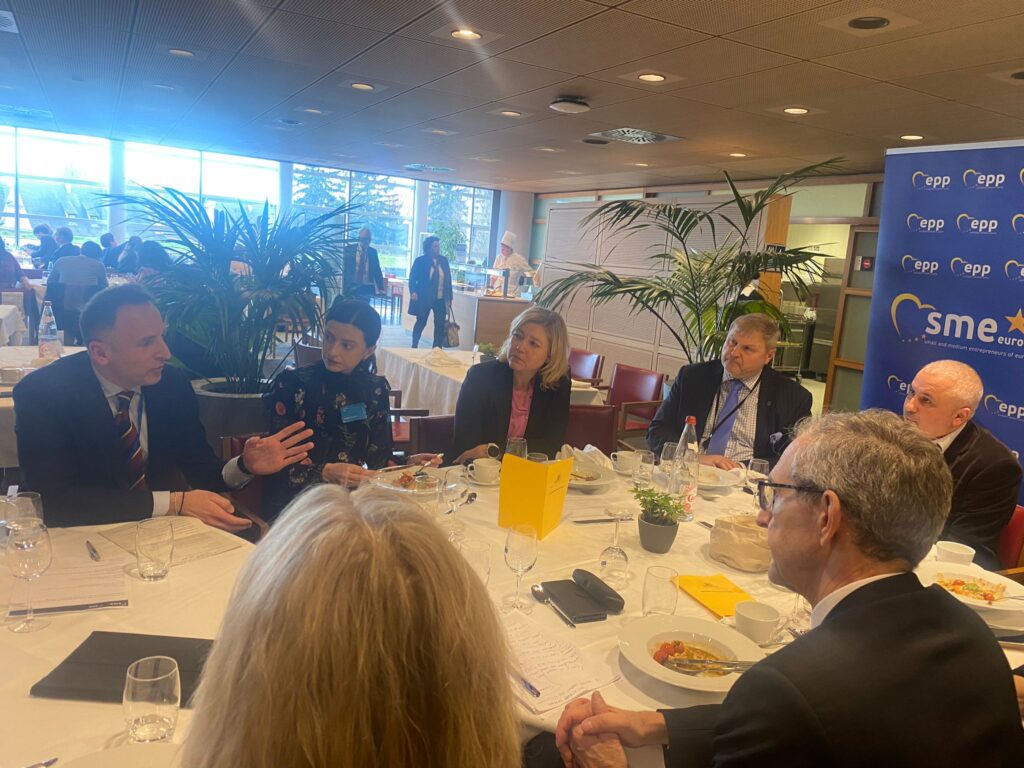
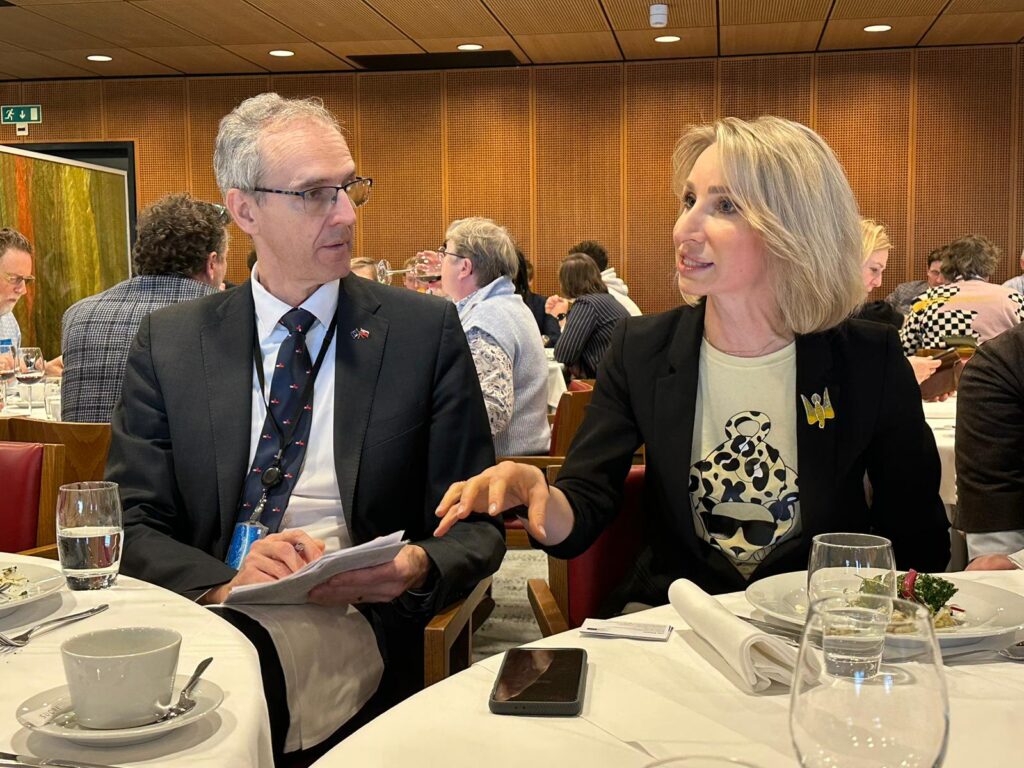
Nataliya KOZAK from Impact Force underscored the paramount importance of prioritizing sustainability in Ukraine’s wartime survival and subsequent revival efforts. She referenced a prevailing negative business sentiment in the country, with only 30 out of 100 businesses reporting the ability to increase turnovers and generate jobs, largely hindered by the purchasing power of Ukrainian customers and limited access to short-term capital. Despite these challenges, a notable percentage of Ukrainian businesses have managed to maintain or even surpass turnover levels from 2021, signaling resilience and growth potential. Looking ahead to 2023, Ukrainian entrepreneurs express optimism, with 45% anticipating growth and another 25% expecting to maintain turnover levels from 2022. Nataliya highlighted key interventions sought by the Ukrainian business sector, including the eradication of corruption, improved access to affordable loans, and tax reforms. She emphasized the importance for Ukrainian entrepreneurs to engage in programs within EU markets and foster collaborations at the SME level. Moreover, she stressed the critical need for policy-level cooperation to inspire Ukrainian regulators to create a conducive environment for entrepreneurship, drawing on effective best practices from EU markets.
Marcin NOWACKI, EESC Rapporteur on EU-UA solidarity lanes, emphasized the critical importance of extending access to the EU Single Market for Ukraine. He advocated for providing Ukrainian companies with training on EU certification and standardization, along with co-financing to facilitate the certification process. These measures, he argued, are essential for enabling more Ukrainian exporters to penetrate the EU Single Market successfully. Among the existing challenges in bilateral exports, Marcin highlighted logistics as a primary concern. Given Europe’s status as the largest trader of Ukrainian grain, he emphasized the need for investment in EU railway terminals to accommodate this trade volume. Additionally, he stressed the necessity for EU-wide mechanisms for insurances and guarantees on road transport and cargo for EU traders operating in Ukraine. Marcin underscored the pivotal role of Poland in facilitating the internationalization of Ukrainian businesses.