
Future of European Defence and SMEs
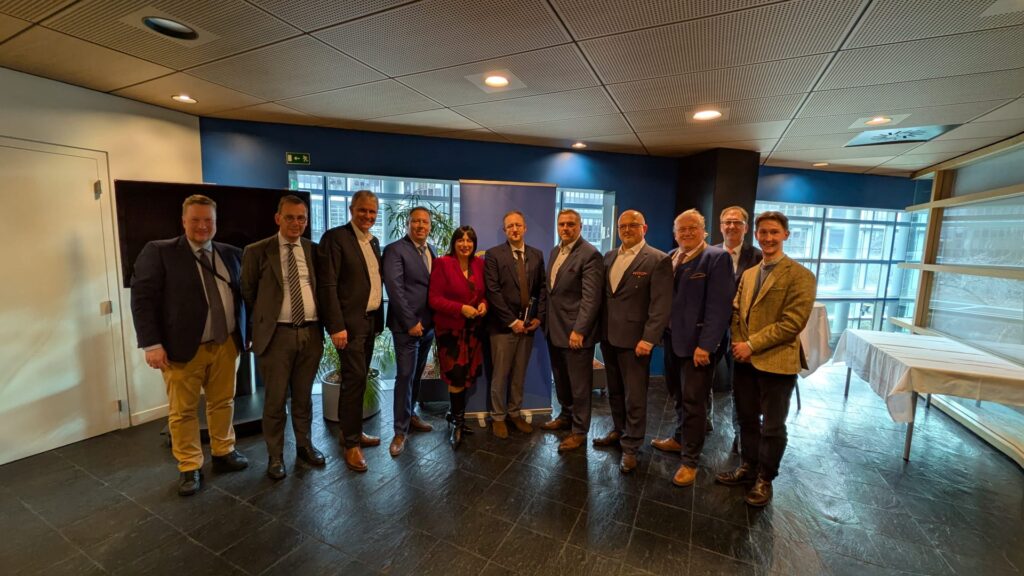
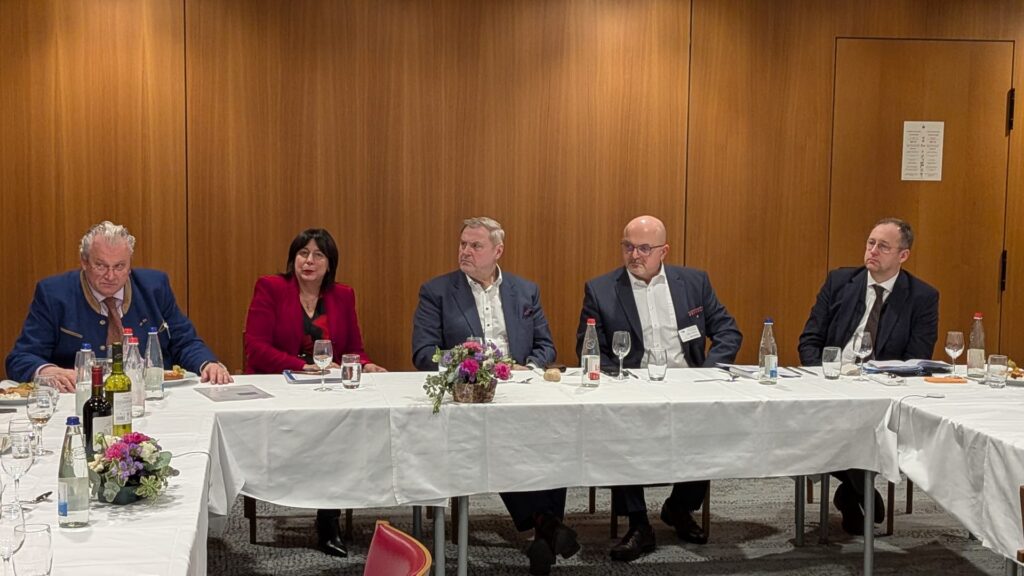
On Tuesday, 10 February, EPP SME Defence and SME Europe, together with Riho Terras, MEP, Chair of the EPP SME Defence Initiative and Vice-Chair of the SEDE Committee, organised an expert meeting on “Future of European Defence and SMEs at the European Parliament in Strasbourg.
Riho Terras MEP, Chair of the EPP SME Defence Initiative and Vice-Chair of the SEDE Committee, opened the discussion by placing it in the context of negotiations on the 2028–2034 Multiannual Financial Framework, stressing the need for future EU funding to strengthen a resilient and competitive European defence industrial base. He highlighted the importance of supporting SMEs, innovation, industrial scale-up, and reducing administrative burdens in the defence sector. He noted that in its first 15 months, the current European Commission has delivered progress on defence and competitiveness, notably through the SAFE initiative and initial efforts to cut red tape. Terras underlined the significance of having, for the first time, a Commissioner for Defence and Space to foster closer cooperation among Member States and better unlock industrial potential. He concluded by stressing that the role of SMEs alongside large PRIMEs must be clearly defined and that flexibility in defence financing must be applied fairly and effectively.
From an industry perspective, Markus Becker, Chair of the SME Connect Defence Working Group, highlighted the concrete role SMEs already play in European defence, drawing on his company’s experience in delivering advanced logistics and infrastructure solutions. He noted recent work for European armed forces, including responses to NATO requests and projects with partners such as the Swiss Army, as evidence that SMEs operate at a high operational level. Becker used these examples to underline that SMEs possess critical defence capabilities but face complex administrative and regulatory challenges.
Fritz von Stülpnagel, Managing Director of DefenceTech Europe, presented the organisation as a pan-European association representing defence technology startups, created to ensure startups have a dedicated voice at EU level. He noted that while many defence tech startups focus on software and dual-use technologies, there is also a growing number developing hardware solutions. von Stülpnagel highlighted that defence tech supply chains are not yet fully European, but are gradually being strengthened by startups. He stressed that access to private investment is essential for scaling innovation, while pointing to ongoing challenges related to ESG perceptions in the defence sector. He also raised concerns about the lack of military mobility for industrial goods, noting that complex customs procedures continue to hinder startups’ ability to deliver, including in support of Ukraine.
Simonas Šatūnas, Head of Cabinet to European Commissioner for Defence and Space, outlined the Commission’s defence priorities, outlined the Commission’s defence priorities, with a strong focus on competitiveness, coordination, and industrial scale-up. He noted that despite increased defence spending, Europe continues to face a significant capability gap resulting from years of underinvestment and fragmented procurement. The Commission’s objective, he explained, is not only to spend more but to spend better, by encouraging joint procurement, long-term planning, and coordinated use of instruments such as SAFE and the proposed European Competitiveness Fund. Šatūnas stressed that SMEs are a critical part of the defence ecosystem but often struggle to move from innovation to industrial scale-up and market deployment. He presented several new and upcoming instruments aimed at faster and more flexible support for innovative SMEs, including targeted funding mechanisms and programmes enabling cooperation and testing in Ukraine. He concluded that EU-level funding should act as a lever to align national efforts and incentivise cooperation, rather than replace national defence spending.
The discussion revealed broad concern about the gap between political ambition and industrial implementation in European defence. Participants stressed that the lack of long-term contracts and predictable demand discourages private investment in capacity expansion. SMEs highlighted heavy administrative burdens related to export controls, customs, ESG requirements, and financing access. Europe’s dependence on non-European suppliers for critical components was widely recognised as a vulnerability, though full autonomy was seen as unrealistic. Military mobility for defence-related industrial goods was identified as a major unresolved issue. The debate strongly referenced Ukraine as a real-world example of the need for speed, flexibility, and continuous innovation.
In his closing remarks, Riho Terras MEP called for pragmatic solutions that balance urgency, security needs, and industrial reality. He reaffirmed EPP SME Defence’s commitment to ensuring that SME perspectives are reflected in EU defence policy. The roundtable concluded that strengthening Europe’s defence industrial base requires more than increased budgets; it demands predictability, coordination, and realistic regulatory frameworks. SMEs were consistently identified as essential to resilience and innovation but insufficiently supported under current systems. Participants agreed that EU instruments must be simpler, faster, and better aligned with operational needs. Lessons from Ukraine were seen as central to future policy design, particularly regarding rapid scale-up and adaptability. Continued dialogue between the European Parliament, the Commission, and industry was deemed essential.