
Hungary’s New Economic Chapter:
A New Future for Business, Investment and European Partnership
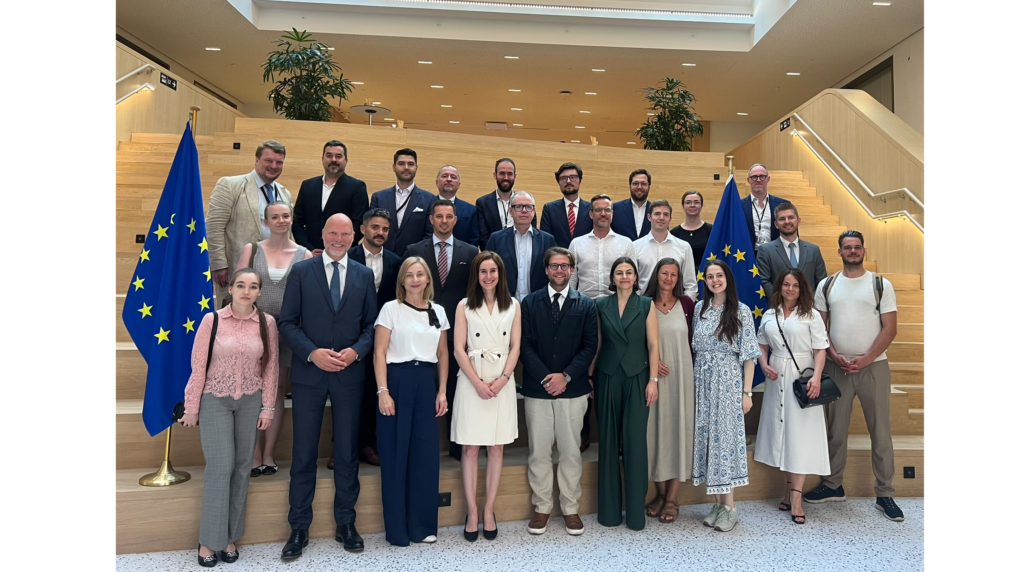
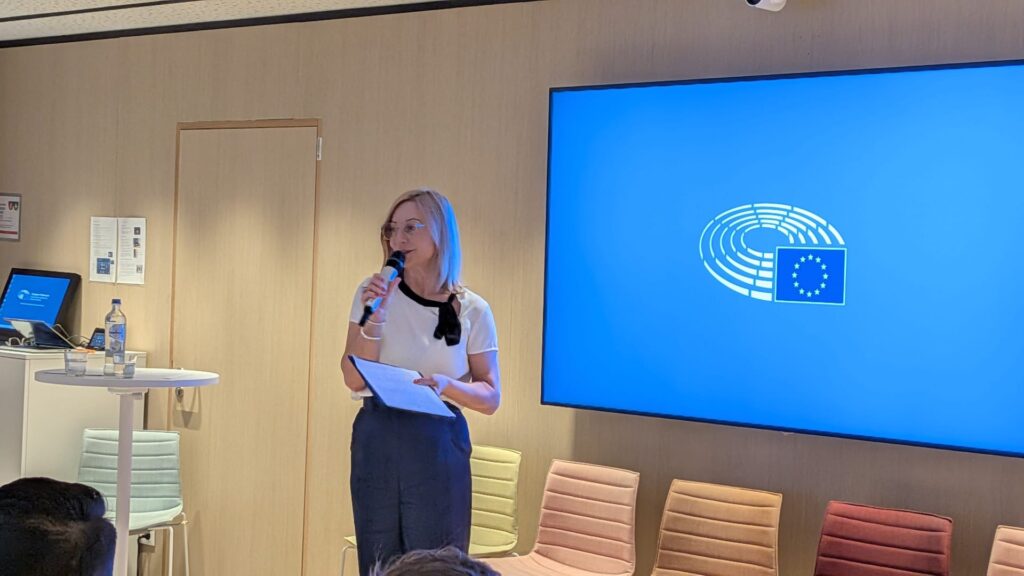
On 25 June 2026, SME Europe and Dóra Dávid MEP co-organised the high-level debate “Hungary’s New Economic Chapter: A New Future for Business, Investment and European Partnership” at the European Parliament in Brussels. Hosted by Dóra Dávid MEP and Jörgen Warborn MEP, President of SME Europe, the event brought together representatives of European institutions, the Hungarian Government, business organisations, entrepreneurs and SME stakeholders to discuss what Hungary’s political change could mean for business, investment and European cooperation.
The debate was among the first political-economic exchanges in Brussels dedicated to Hungary’s renewed direction after the 2026 parliamentary elections. It took place as Hungary again attracted broad European attention — this time through the prospect of renewal, reform and a more constructive European partnership.
The elections opened a new debate about Hungary’s relationship with the European Union, its role in the Single Market and its ability to rebuild confidence among businesses, investors and European partners. For entrepreneurs, SMEs and investors, this new phase matters because political stability, legal certainty and trust are essential conditions for investment, growth and long-term planning.
For the participants, the discussion made clear that Hungary’s new chapter is both political and economic. Political change has created a moment in which reform, trust and opportunity can come together. Legal certainty, transparency and predictability are practical business conditions for companies seeking to invest, expand and create jobs.
The challenges inherited from previous years remain real, yet they also make the current moment more significant. Rebuilding relations with the European Union, strengthening investor confidence and reinforcing legal certainty will require credible reforms, administrative capacity and sustained implementation. At the same time, the debate showed Hungary’s renewed political momentum and willingness to reconnect with European partners.
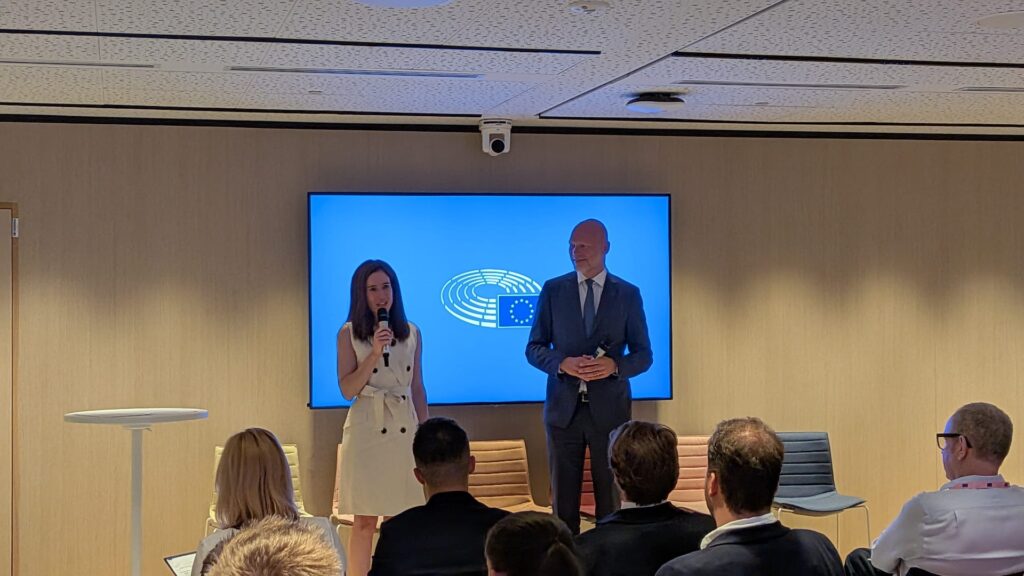
Opening the discussion, Dóra DÁVID MEP, Co-Organiser and Host of the event and Member of the Intergroup on Small and Medium-Sized Enterprises, described the debate as the beginning of a new chapter in Hungary’s relationship with Europe. She underlined that rebuilding trust, strengthening the rule of law and creating a predictable environment for businesses and investors must be central to this new phase. She also encouraged Hungarian entrepreneurs to engage more actively in European policymaking and bring their practical experience into future EU legislation.
Jörgen WARBORN MEP, President of SME Europe and Host of the event, placed the Hungarian debate within Europe’s wider competitiveness agenda. Europe’s economic strength, he argued, depends on a business environment that enables entrepreneurship rather than overburdens it. Reducing regulatory burdens and simplifying legislation are therefore not administrative details, but essential conditions for investment, innovation and SME growth. He reaffirmed SME Europe’s commitment to ensuring that the voice of small businesses is heard in European policymaking.
The perspective of the new Hungarian Government was presented by Ágnes FÁBIÁN, Hungarian State Secretary for Economic Development at the Ministry of Economy and Energy. She outlined the government’s economic priorities, focusing on legal certainty, transparency and restoring investor confidence. She highlighted Hungary’s competitive advantages, including its strategic location, strong industrial base, skilled workforce and growing renewable energy sector, and presented plans to strengthen SMEs and attract new investment. State Secretary Fábián also noted that the government had already taken concrete steps to unlock frozen EU funds, describing this as essential for stabilising the economy, supporting growth and kickstarting investment. She reaffirmed the government’s ambition to support innovation and create a predictable business environment for long-term development.
From the European Commission’s side, Eszter BATTA, Deputy Head of Unit for SMEs at DG GROW, outlined how the Commission supports SMEs through financial instruments, advisory services and the forthcoming Competitiveness Fund. She stressed the importance of improving access to finance, innovation programmes and European value chains, while simplifying existing rules. Her contribution underlined that Hungary’s renewed engagement with Europe can open practical opportunities for its businesses, provided these instruments are understood, accessed and used effectively.
A recurring theme throughout the debate was confidence. In economic life, confidence is not merely a political mood; it is a precondition for investment and enterprise. Without it, capital waits, talent leaves and entrepreneurs hesitate. With it, companies can plan, investors can engage and young businesses can grow.
This was reflected in the contribution of Csongor BIÁS, Managing Director at Startup Hungary. He described how Hungary’s startup ecosystem had been affected in recent years by declining international confidence and reduced investment. At the same time, he noted that political change has already begun to restore optimism, with international investors and entrepreneurs showing renewed interest in Hungary. Rebuilding confidence, he concluded, will be essential if Hungary wants talented young entrepreneurs to remain in the country or return from abroad.
The innovation and digital economy perspective was brought in by Déliága ÁKOS, Board Member at IVSZ – Hungarian Association of Digital Companies. He stressed that Hungary should make full use of renewed access to European programmes, funding opportunities and innovation networks. Stronger cooperation between companies, universities and European institutions, he argued, would improve competitiveness and accelerate digital transformation. He also underlined the importance of helping businesses better understand and use available EU instruments.
A similar shift in business perception was described by Balázs KOS, Founder and CEO of Blue Door Consulting. He observed that companies are already responding positively to Hungary’s changing political environment. International clients, particularly in the energy, healthcare and digital sectors, are showing growing interest, and requests from companies exploring new investment opportunities have increased significantly. At the same time, he emphasised that momentum created by political change must be sustained through reliable institutions and credible implementation.
The debate also showed that Hungary’s new economic chapter is not only about investors, public funds or macroeconomic signals, but also about the companies that carry Europe’s economy in daily practice. Katarzyna GIERCZAK-GRUPIŃSKA, Founder and President of the Family Business Foundation, highlighted the importance of stronger cooperation between family businesses across Europe and better networks for entrepreneurs. She emphasised that family businesses are built on trust, long-term commitment and values passed from one generation to the next — qualities that are essential to sustainable business success.
Ilya BRUGGEMAN, Director for Digital, Single Market and Consumer Policy at EuroCommerce, focused on the practical conditions for competitiveness. Digitalisation and skills development, he emphasised, are essential to maintaining Europe’s economic strength. Retail increasingly depends on digital talent, making reskilling and upskilling a central priority for governments and businesses alike. Stable regulation and trust, he added, are crucial for companies making long-term investment decisions.
The broader European business organisation perspective was presented by Ben BUTTERS, CEO of Eurochambres. He welcomed the renewed engagement of Hungarian business organisations with European partners and described the changing atmosphere as positive for the country’s future. He argued that EU funding should be used strategically to stimulate long-term growth rather than cover short-term budget gaps, and encouraged greater participation of business leaders in policymaking. Hungary, he noted, faces many of the same challenges as other Member States: skills shortages, energy costs and administrative burdens. This makes closer European cooperation not only desirable, but necessary.
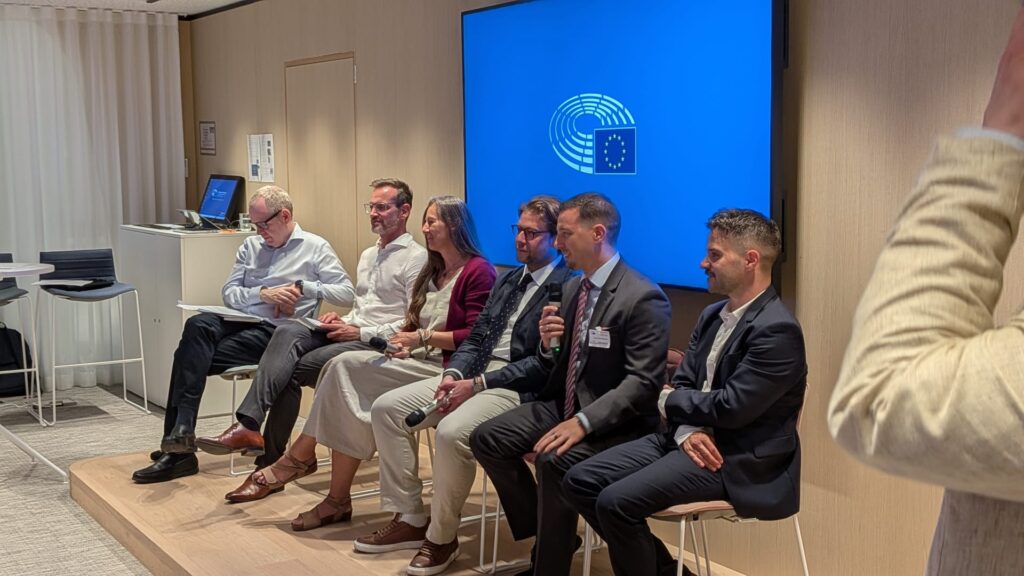
Throughout the debate, Horst HEITZ, Secretary General of SME Europe, encouraged participants to connect political priorities with the everyday realities of entrepreneurs. The decisive question, he stressed, is not only whether reforms are announced, but whether they lead to tangible improvements for companies, investors and entrepreneurs. Rebuilding trust between businesses, governments and European institutions will require continued dialogue, practical cooperation and a stronger role for SMEs in policymaking.
The discussion was intensive, engaged and constructive. It addressed legal trust, transparency, corruption, regulatory simplification, EU funding, investment conditions, startups, digitalisation, skills, family businesses and Hungary’s future role within the Single Market. Across these themes, one central message emerged: Hungary’s political renewal will be judged economically by whether it creates confidence, predictability and practical opportunities for businesses.
In her concluding remarks, Dóra DÁVID MEP underlined the importance of keeping this dialogue open and ensuring that Hungary’s renewed European direction is shaped not only by policymakers, but also by entrepreneurs and businesses. The new chapter, she stressed, must lead to practical results and give companies the confidence to invest, innovate and grow.
For SME Europe, the debate captured the balance of the moment: support for Hungary’s renewed direction, realism about the work ahead and confidence in the opportunities that can emerge from closer European partnership. In this sense, Hungary’s new economic chapter is more than a national turning point. It is also a European opportunity.